 We here in France are almost lucky. Energy prices at the pump have risen, but not to the same extent as with our neighbor, Germany. However, prices will slowly begin to rise for Germany's border regions as well. Why oil multis feel the need to enrich themselves so shamelessly during a crisis, specifically in Germany, is a different matter altogether.
It is slowly becoming apparent, and is quite frightening, that the consequences of the war waged by Israel and the US against Iran will have much more far-reaching effects.
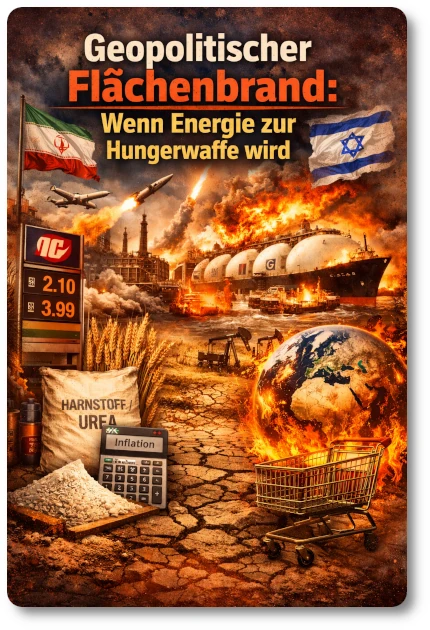
After Israel attacked the Iranian South Pars gas field – the largest natural gas reserve in the world – Iran responded with missile strikes on Qatar's Ras Laffan Industrial City. This hit the heart of the global liquefied natural gas (LNG) supply.
South Pars holds 51 trillion cubic meters of gas. An attack here hits not only Iran but also Qatar, as both countries share the field. In response, Iran massively damaged the export terminals in Ras Laffan. Experts estimate the repair time at three to five years. Since Qatar accounts for 20% of global LNG production, the global supply is structurally tightened. While US officials described the attack as coordinated with the White House, President Trump denied this on Truth Social. Consequently, with one tweet, Trump destroyed any trust the Gulf states had in his administration.
Market Analysis: Energy and Fertilizers (as of March 2026)
The impact on commodity markets is drastic and immediate. Natural gas is not just a fuel, but the primary raw material for nitrogen fertilizer (urea).
• Natural gas: The European gas price (TTF) has nearly doubled to over €60/MWh since the attacks began.
• Urea: Fertilizer prices have exploded. Urea rose by nearly 50% in March alone to over USD 700 per ton – the highest level since 2022.
• Wheat: On the futures exchanges, wheat climbed to around USD 6.00 per bushel. Farmers in exporting countries like Australia and the US are already cutting back on acreage because they can no longer afford the expensive fertilizer, or it is simply unavailable.
In an 11-to-1 vote, the US Federal Reserve decided to keep interest rates steady as inflation rises again due to energy prices (forecast: 2.7%).
"No one knows how long the higher gas prices will last," said Fed Chair Jerome Powell. As long as food and energy prices continue to rise, the hoped-for interest rate cuts for 2026 have moved into the distant future. This means permanently high borrowing costs for businesses and consumers.
Europe's Leap Forward
While the Middle East burns, a small silver lining is appearing on our horizon: Europe's radical move away from fossil fuels is paying off as a security strategy.
In 2025, for the first time, 30% of EU electricity came from wind and sun, overtaking fossil fuels (29%). Every new wind turbine and every single square meter of solar panels reduces the need for gas imports from crisis zones. However, in the short term, the pain remains real: the chemical industry and agriculture are suffering massively under current prices.
Dear Donald, you can start a war to distract from the Epstein files, but it takes the other side to end it. You should know this, as you once told Ukrainian President Zelenskyy: "It takes two to tango." By blocking or taxing the Strait of Hormuz (reportedly charging up to USD 2 million in transit fees), Iran is signaling that it is prepared to keep the global economy under pressure until its own infrastructure is secure.
And what does this mean for us, the end consumers? Today's fertilizer shortage will be tomorrow's empty shelves or massive price increases. Particularly meat, bread, and greenhouse-grown vegetables will become significantly more expensive in the fall of 2026. And while we in Europe grumble about prices, the consequences in poorer regions of the world are, of course, far more fatal. Thanks, Donald.